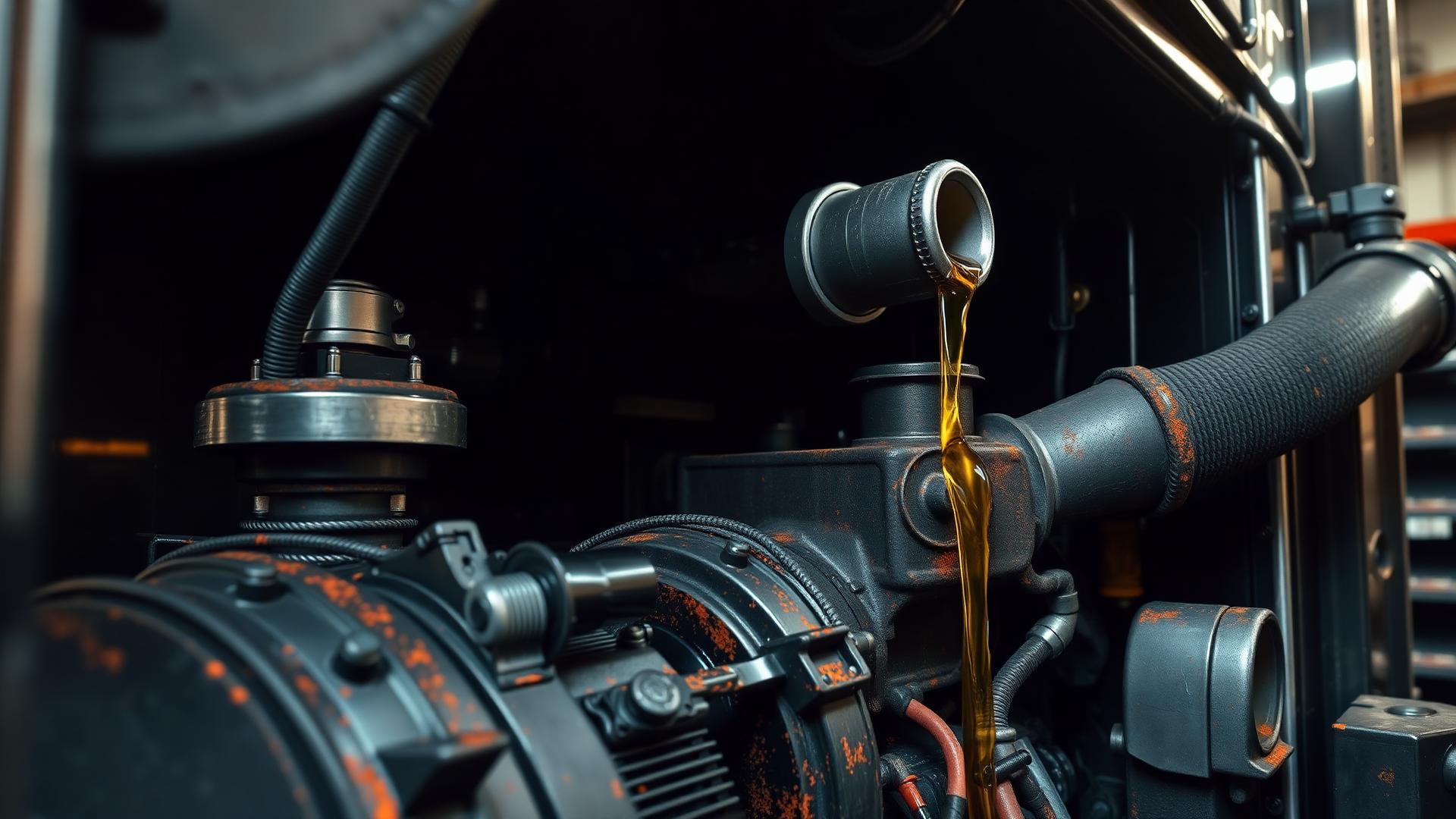
Heavy Duty Diesel Engine Oil
CI-4 rated fleet-grade diesel engine oil - engineered for maximum protection in trucks, mining equipment, and heavy-duty commercial engines.
A Diesel Engine Attacks Its Own Oil
Diesel combustion is harder on lubricant than petrol combustion in three specific ways. It produces far more soot, and in engines with exhaust gas recirculation some of that soot ends up in the sump, where clumped particles thicken the oil and act as an abrasive. It generates acids that attack bearing surfaces and cylinder walls, particularly where fuel sulphur content is high. And turbocharger bearings run hot enough to coke ordinary oil into hard deposits that block the very passages feeding them.
Each of those is met by a different part of the formulation. Dispersants hold soot particles apart so they stay suspended and harmless. An alkaline reserve — measured as Total Base Number — neutralises acids as they form, and depletes steadily until it runs out. ZDDP anti-wear chemistry maintains a protective film on loaded surfaces. Thermal stability keeps viscosity from breaking down under sustained heat.
Bloom Max heavy duty diesel oil is built to API CI-4 with a Group II+ virgin base oil, a TBN of 10 to 12 mg KOH/g, ZDDP anti-wear chemistry, and a low sulphated ash formulation compatible with particulate filters and catalytic converters. Available in 15W-40, 10W-30 and 20W-50, from 1 litre bottles to 210 litre drums.
Engineered for the Long Haul.
Extreme Thermal Stability
Engineered to withstand sustained high-temperature operation in turbocharged diesel engines without viscosity breakdown.
Soot & Sludge Control
Advanced dispersant technology keeps soot particles in suspension, preventing harmful deposits and engine wear.
Extended Drain Intervals
Premium base oils and robust additive packages allow significantly longer service intervals - reducing downtime.
Anti-Wear Protection
ZDDP anti-wear chemistry delivers a protective film on critical engine surfaces even under extreme loads.

Beyond Standard Diesel Oils.
Fleet-Grade Durability
Formulated for the demands of long-haul trucking, mining, and heavy construction equipment.
Turbocharger Compatible
Resists coking and deposit formation in modern turbocharger bearings and oil passages.
Low Ash Formula
Reduced sulphated ash protects DPF systems and catalytic converters in emissions-compliant engines.
Cold Start Performance
Optimized pour point ensures reliable oil flow and engine protection during cold-weather start-ups.
Technical Details.
Built For.
Need Fleet-Scale Supply?
Contact our team for bulk drum orders, distributor pricing, or custom viscosity blends.
Get in Touch →What the Diesel Oil Specs Mean.
Four figures determine whether an oil suits a given fleet. Knowing what each controls makes specification straightforward.
API CI-4 — the Service Rating
C means compression-ignition, so diesel; S would mean a petrol engine oil. The second letter marks the standard level, rising through the alphabet as requirements tighten, and the 4 denotes four-stroke. CI-4 is backward compatible with engines specifying CH-4.
TBN — the Acid Reserve
Total Base Number measures the alkaline reserve available to neutralise combustion acids, in mg KOH per gram. It falls over the drain interval, and corrosive wear starts once it is exhausted. A TBN of 10 to 12 is what makes extended drain intervals possible — and it matters most on high-sulphur fuel.
Group II+ Base Oil
API groups base oils by purity and saturate content. Group II+ is hydro-processed, with far fewer impurities and better oxidation resistance than the Group I stock used in budget oils — so it resists thickening and deposit formation for longer in service.
Low Sulphated Ash
Ash is what metallic additives leave behind after combustion. In engines with diesel particulate filters or catalytic converters it accumulates until the filter blocks. A low ash formulation slows that loading and extends filter service life.
Choosing a Viscosity Grade
| Grade | Best suited to | Notes |
|---|---|---|
| 15W-40 | General-purpose, mixed climates | The most widely stocked fleet grade |
| 10W-30 | Cooler regions, newer engines | Better cold-start flow, small fuel economy gain |
| 20W-50 | Consistently hot climates, older engines | Thicker film at temperature, higher mileage units |
Always confirm the grade and API rating against the engine manufacturer's specification. Where drain intervals are being extended, used oil analysis is the reliable way to confirm remaining TBN rather than relying on distance alone.
Common Questions
Heavy Duty Diesel Oil, Answered.
API ratings, TBN, viscosity grades and soot control — the questions fleet engineers and trade buyers ask most about heavy duty diesel oil.
What does API CI-4 mean on a diesel oil?
API is the American Petroleum Institute service classification. The C means compression-ignition — diesel — as opposed to S for spark-ignition petrol engines. The second letter marks the standard level, advancing through the alphabet as requirements tighten, and the 4 denotes four-stroke. CI-4 covers soot handling, wear control, deposit control and viscosity retention for modern turbocharged diesels, and is backward compatible with engines specifying CH-4.
What is TBN, and why does 10-12 matter?
TBN is Total Base Number, measured in mg KOH per gram. Diesel combustion produces acids that attack bearings and cylinder walls, and the oil's alkaline reserve neutralises them. TBN measures the size of that reserve. It depletes over the drain interval, and when it runs out corrosive wear begins. A TBN of 10 to 12 gives a substantial reserve, which is what allows extended drain intervals — and matters most where diesel fuel sulphur content is high, as it still is in many markets.
Which viscosity grade should a fleet choose?
15W-40 is the general-purpose choice for most mixed climates and the most widely stocked grade. 10W-30 flows more readily on cold starts and offers a small fuel economy benefit, suiting cooler operating regions and newer engines. 20W-50 gives a thicker film at high temperature, favoured for older or high-mileage engines and consistently hot climates. Always confirm against the engine manufacturer's specification.
Why does soot control matter more in diesel than petrol engines?
Diesel combustion produces far more soot, and modern engines with exhaust gas recirculation feed some of it back where it enters the oil. If those particles clump together they thicken the oil and act as an abrasive. Dispersant additives keep each soot particle suspended and separate so it stays harmless until the oil is drained. Soot handling capacity is the main thing separating a true heavy duty diesel oil from an ordinary engine oil.
What is low ash oil and does my fleet need it?
Sulphated ash comes from metallic additives and is what remains after combustion. In engines fitted with diesel particulate filters or catalytic converters, that ash accumulates and eventually blocks the filter. A low ash formulation reduces that loading and extends filter life. Fleets running older engines without after-treatment gain less from it directly, but it does no harm.
Can I distribute Bloom Max diesel oil in my country?
Yes. Tesla Power USA appoints distributors, wholesalers and importers by territory, with West Africa and East Africa currently prioritised. Packaging from 1 L bottles to 210 L drums supports retail, workshop and fleet channels from one supply agreement, and custom viscosity blends are available for fleet-scale orders.
Explore the range
- Bloom Max 5W-40 fully synthetic engine oil
- Truck & bus batteries
- Bison Trax TBR truck & bus tyres
- CoolMax engine coolant
Trade buyers can review distributor partnership terms, register a warranty, or contact the regional team.
Power Through Every Mile.
From highway haulers to off-road giants - CoolMax HDDO keeps the world's hardest-working engines protected.