
LiON Max LiFePO4
A smarter, longer-lasting power solution — advanced LiFePO4 technology for automotive, solar, and backup power that outperforms lead-acid in every way.
Half the Battery You Bought Was Never Usable
The most misleading number in backup power is the amp-hour rating on a lead-acid battery. Discharging one much beyond 50% shortens its life sharply, so a 200Ah lead-acid battery realistically delivers about 100Ah of usable energy. Half the capacity — and half the weight and half the space — exists only to protect the other half.
There are consequences beyond the arithmetic. Weight makes installation and transport expensive, particularly for remote sites and rooftop or vehicle applications. Flooded types need water topping and ventilation. And the cycle count is finite: a battery cycled daily is consumed steadily whether or not anyone is watching.
LiFePO4 changes each of those. LiON Max delivers 100% of its rated capacity as usable energy, runs 5000 or more cycles at 80% depth of discharge, weighs 60 to 70% less than the lead-acid equivalent, needs no maintenance or ventilation, and carries an integrated smart BMS protecting against overcharge, over-discharge, short circuit and over-temperature. Ten-year design life with 80%+ capacity retained, certified to UN38.3, IEC 62619, BIS, CE and UL.
Next-Generation Energy Storage.
Extended Battery Life
LiFePO4 technology endures over 4× the life of conventional lead-acid batteries — long-lasting power you can rely on.
Efficient & Rapid Recharging
Charge accumulates quickly and efficiently, dramatically reducing downtime between cycles.
Lightweight & Compact
Delivers greater power at a fraction of the weight — easy to handle, transport, and install in any setup.
Built-In BMS Protection
Internal Battery Management System safeguards against overcharge, overheat, and short-circuit conditions.
LiON Max Series.
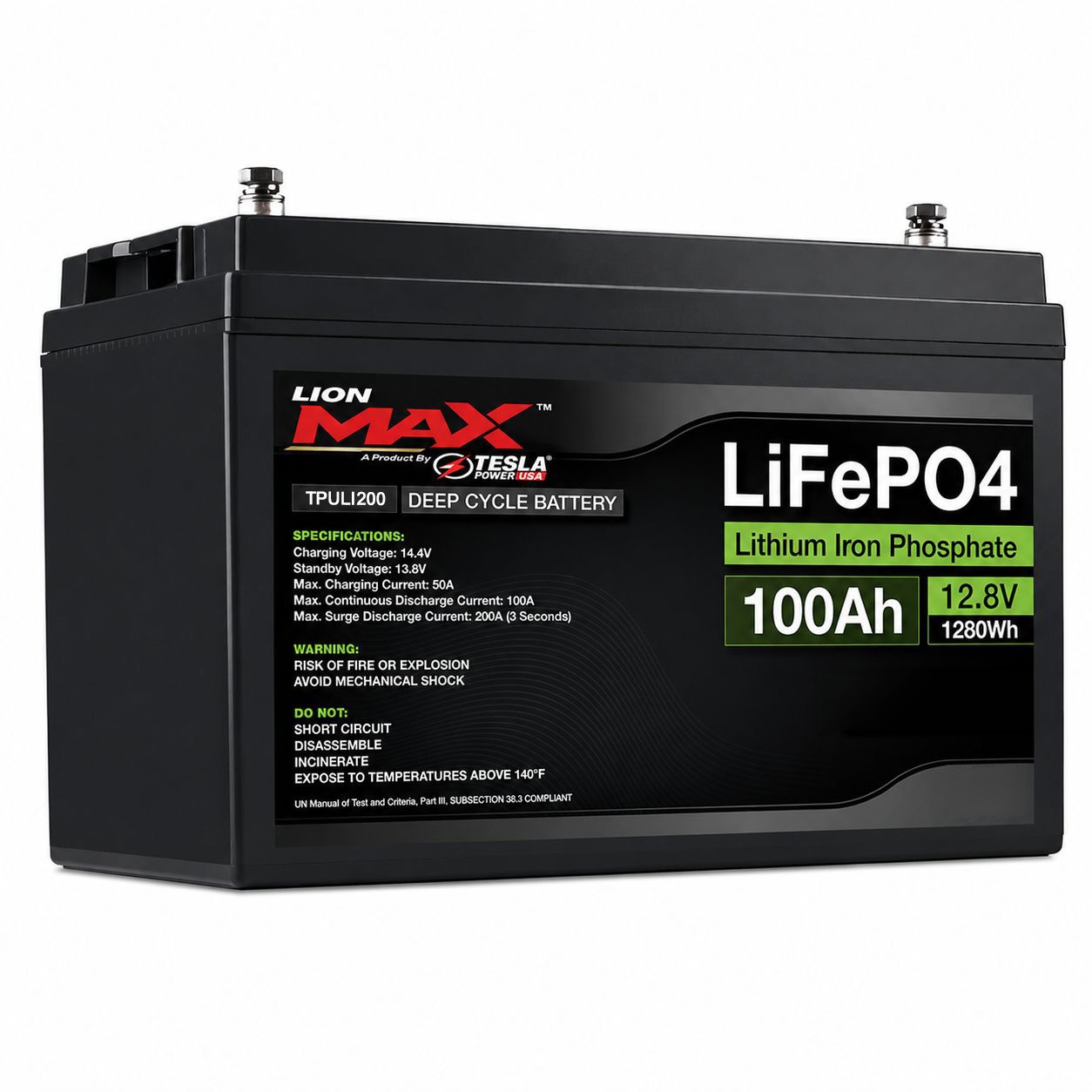
EP12100
12.8V • 100Ah • 1280Wh Deep Cycle LiFePO4
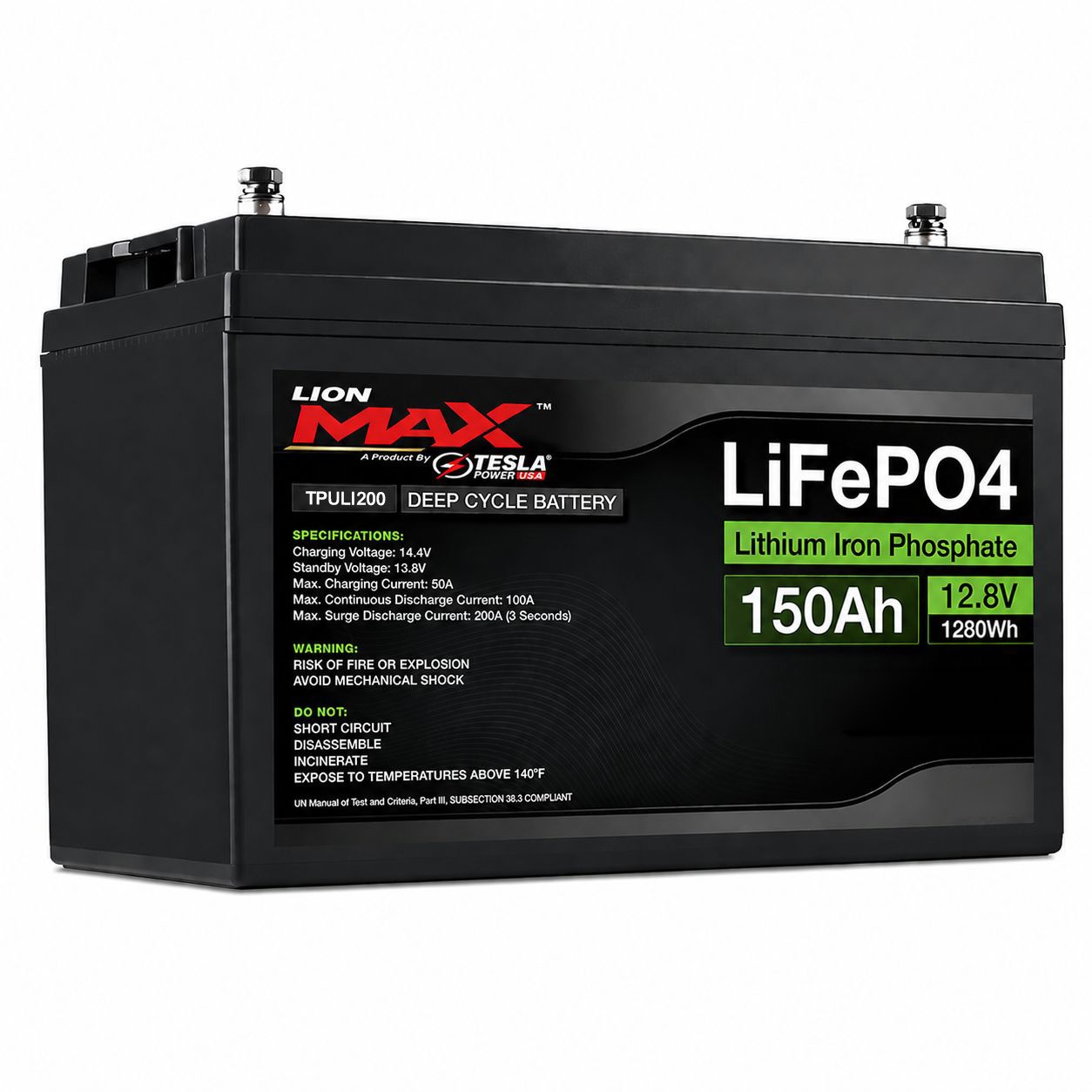
EP12150
12.8V • 150Ah • 1920Wh Deep Cycle LiFePO4
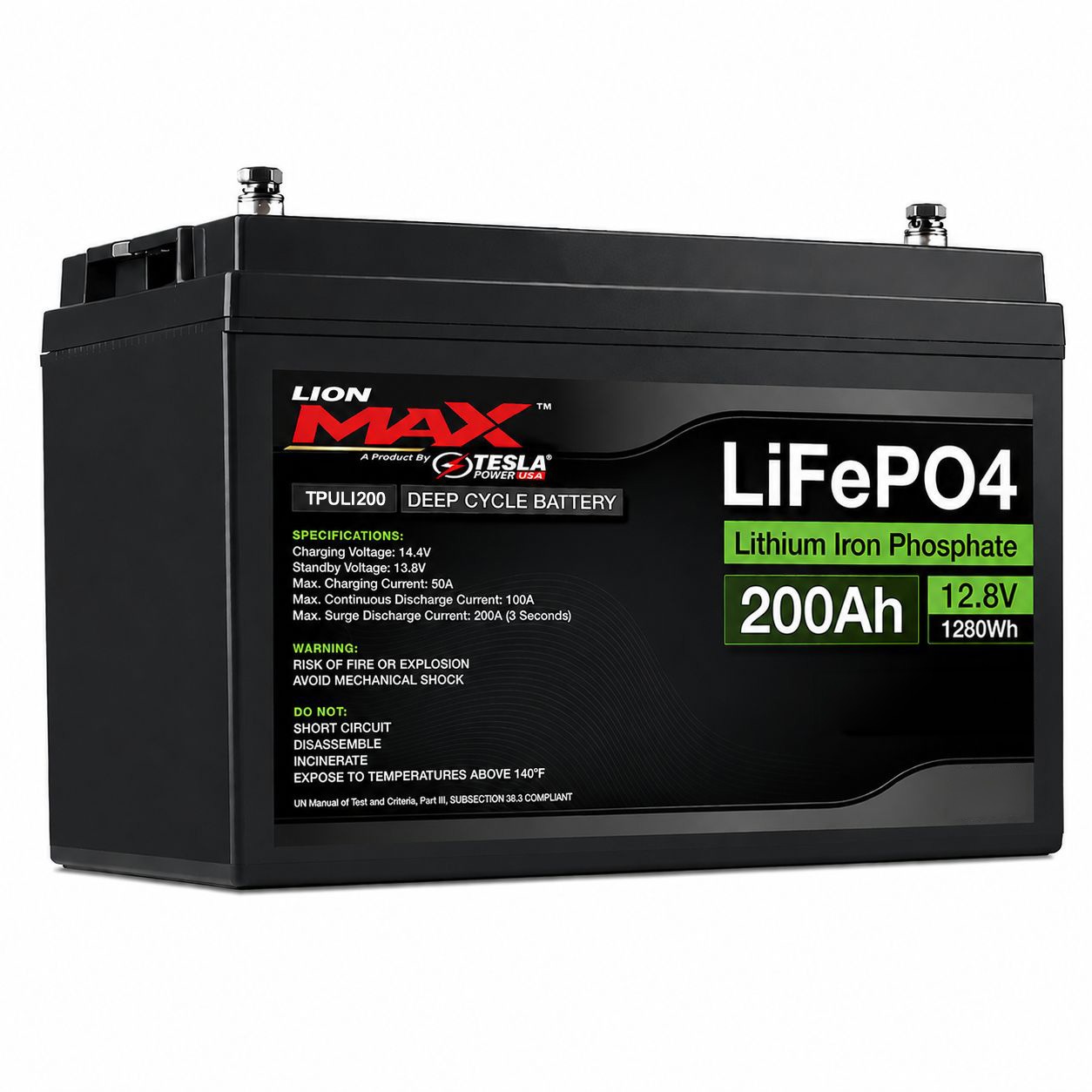
EP12200
12.8V • 200Ah • 2560Wh Deep Cycle LiFePO4
Beyond Lead-Acid Limits.
100% Usable Capacity
Unlike lead-acid batteries limited to 50% DoD, LiFePO4 delivers full rated capacity — maximizing your energy investment.
Stable in Extreme Temps
Consistent power output even in harsh hot or cold conditions — reliable performance, anywhere.
Zero Emissions
No toxic lead, no acid, no gases — the cleanest battery chemistry available, fully recyclable and RoHS compliant.
10-Year Design Life
Exceptional calendar life with minimal degradation — retains 80%+ capacity after a decade of cycling.
Technical Details.
Ideal For.
Ready to Upgrade from Lead-Acid?
Our team can help you design the right lithium system - drop-in replacements or custom configurations.
Get in Touch →Sizing a Lithium Replacement.
Because lithium delivers its full rated capacity, replacing lead-acid rarely means matching the Ah figure. It usually means halving it.
| Model | Rated | Usable energy | Roughly replaces |
|---|---|---|---|
| EP12100 | 12.8V 100Ah | 1280Wh | ~200Ah lead-acid |
| EP12150 | 12.8V 150Ah | 1920Wh | ~300Ah lead-acid |
| EP12200 | 12.8V 200Ah | 2560Wh | ~400Ah lead-acid |
Cycle Life Across the Range
| Battery type | Rated cycles | Usable capacity | Best for |
|---|---|---|---|
| Nucleus Max SMF VRLA | 400+ at 50% DoD | ~50% | Standby UPS and telecom |
| Inverto Max tubular | 1500+ | ~50% | Daily home and office backup |
| Solar Max tubular | 3000+ at 50% DoD | ~50–80% | Solar storage |
| LiON Max LiFePO4 | 5000+ at 80% DoD | 100% | Daily cycling, weight-critical, premium |
Check the Charger First
12.8V LiFePO4 is a drop-in replacement for a 12V lead-acid battery in most systems, with 25.6V, 48V and 51.2V available for larger banks. The one thing to confirm is the charge source: lead-acid chargers use a different voltage profile, and older inverters and controllers may have no lithium setting. Verify before converting.
Where Lead-Acid Still Wins
For pure standby duty — a UPS that discharges a few times a year — a VRLA battery is rarely discharged enough for lithium's cycle advantage to pay back its higher purchase price. Lithium earns its cost where the battery is cycled daily, where weight matters, or where space is tight.
Download Brochures
Detailed product specifications, compliance data and technical drawings.
Common Questions
LiFePO4 Batteries, Answered.
Usable capacity, chemistry, BMS and switching from lead-acid — the questions installers and trade buyers ask most about the LiON Max range.
How does a 100Ah lithium battery compare to a 100Ah lead-acid battery?
They are not equivalent. A lead-acid battery should only be discharged to around 50% to preserve its life, so a 100Ah unit gives roughly 50Ah of usable energy. LiFePO4 delivers its full rated capacity, so a 100Ah LiON Max gives close to 100Ah usable. In practice one 100Ah lithium battery replaces roughly a 200Ah lead-acid battery — at 60 to 70% less weight, and in a smaller space.
Why LiFePO4 rather than other lithium chemistries?
Lithium iron phosphate has a far more stable cathode chemistry than the nickel-based lithium used in most consumer electronics and many EVs. It resists thermal runaway, tolerates higher temperatures, and does not contain cobalt. It gives up some energy density in exchange, which matters in a phone but rarely in a stationary storage or backup installation — making LiFePO4 the standard choice for solar, UPS and off-grid systems where safety and cycle life outweigh compactness.
What does the BMS do?
The Battery Management System is electronics built into the battery that monitors each cell and intervenes automatically. It prevents overcharge, over-discharge, short-circuit and over-temperature conditions, and balances cells so they age evenly. Without a BMS a lithium pack cannot be operated safely, which is why an integrated smart BMS is standard on every LiON Max unit rather than an accessory.
Is lithium actually cheaper than lead-acid?
Not on purchase price — on cost per cycle. At 5000-plus cycles against roughly 400 for VRLA, 1500 for inverter tubular and 3000 for solar tubular, a LiFePO4 battery delivers far more usable energy over its life. Add 100% usable capacity, meaning half the rated Ah needs to be bought, plus no water topping and no ventilation requirement, and the economics usually favour lithium wherever the battery is cycled daily. For standby duty that is rarely discharged, VRLA can still be the better value.
Can LiON Max replace my existing lead-acid battery directly?
Often yes — 12.8V LiFePO4 is designed as a drop-in replacement for a 12V lead-acid battery, and 25.6V, 48V and 51.2V options cover larger systems. The critical check is the charger. Lead-acid chargers use a different voltage profile, and some older inverters or controllers have no lithium setting. Confirm the charge source can be set to a LiFePO4 profile, or specify a compatible charger, before converting.
Can I distribute LiON Max batteries in my country?
Yes. Tesla Power USA appoints distributors, wholesalers and importers by territory, with West Africa and East Africa currently prioritised. UN38.3, IEC 62619, BIS, CE and UL certification covers the transport and safety documentation lithium shipments require. Custom configurations and drop-in replacement system design are handled by the regional team.
Explore the range
- Solar Max solar tubular batteries
- Nucleus Max SMF-VRLA industrial batteries
- Inverto Max inverter tubular batteries
- Wall-mounted UPS batteries
Trade buyers can review distributor partnership terms, register a warranty, or contact the regional team.
The Lithium Advantage.
From solar storage to e-mobility - LiON Max is powering the transition to cleaner, smarter, longer-lasting energy.